- Why shade is a safety feature, not a luxury
- The three formats, honestly compared
- Sizing: the table plus the chairs plus the walk
- Wind is the real opponent
- Anchoring, surface by surface
- What the roof itself is made of
- Assembly day, planned like a small pour
- Living under it: the seasonal rhythm
- The grill, the cooler and the roofline
- Choosing, in the end
There is a fifteen-minute stretch of a July afternoon when every backyard tells the truth. The lawn is bright, the table is set, and nobody is sitting at it, because the sun has made the seating area uninhabitable. The house has climate control, the yard has none, and the difference decides where the afternoon actually happens. Shade is the yard's climate control, and it is the cheapest square footage a property will ever gain: the temperature difference between full sun and engineered shade is the difference between a space people use and a space people photograph.
We build three kinds of roof for that job: hardtop gazebos that stand through winter, pop-up canopies that live folded in a bag, and party tents that exist for the days when the guest list outgrows the patio. They are not three prices for one product. They are three different answers to how often, how large and how permanent. What follows is the full decision, from the first sizing measurement to the last winter chore.
Why shade is a safety feature, not a luxury
Before the formats, the reason. Public heat guidance is blunt and worth quoting plainly: in serious heat, the National Weather Service tells people to slow down, reschedule strenuous activity to the coolest part of the day, wear light and loose clothing, minimize direct sun exposure, and rest and cool down in the shade. It also says to drink water often, without waiting to feel thirsty. Shade appears in that guidance by name because radiant sun load is a real physiological burden, not a comfort preference: the same person doing the same activity does measurably better out of direct sun.
That is the frame we design around. A shaded A shaded seating area is not decor. It is the piece of equipment that makes the yard usable during exactly the weeks when people most want to be in it. The full heat guidance is linked in the sources at the end of this page, with the date we read it, and it is worth five minutes of your time in June.
The yard does not need to be cooler than the house. It needs to be cooler than the sun says it has to be.
The three formats, honestly compared
The fastest way to see the differences is side by side. The rows are the questions that actually decide the purchase.
| Question | Hardtop gazebo | Pop-up canopy | Party tent |
|---|---|---|---|
| Stays up how long | Years, through winter | A weekend, then the bag | A weekend to a season |
| Setup effort | An afternoon, two people, once | Ten minutes, two people | An afternoon, several people |
| Typical footprint | 10 by 10 to 12 by 20 feet | 10 by 10 to 10 by 20 feet | 16 by 32 feet and up |
| Frame | Galvanized steel, double roof | Folding steel, fabric top | Galvanized poles, PVC cover |
| Wind behavior | Vents gusts through the double roof | Must come down in real wind | Guyed and staked by plan |
| Right when | The patio table has a permanent home | Shade must travel or store flat | The event outgrows the patio |
The one-sentence versions. The hardtop gazebo is architecture: buy it when the seating area has a fixed address and deserves a fixed roof. The pop-up canopy is equipment: buy it when shade has to appear at a market stall, a sideline, a campsite, then vanish into a car trunk. The party tent is infrastructure: buy or borrow it for the graduation, the reunion, the wedding in the meadow, and respect its stake plan like a contract.
Sizing: the table plus the chairs plus the walk
Shade is sized by what happens under it, and the most common mistake is buying the footprint of the furniture instead of the footprint of the activity. A six-person dining table is roughly 3 by 6 feet, but dinner is not. Chairs pull out, people walk behind seated people, and the serving cart parks somewhere. The working rule: measure the furniture arrangement, then add three feet on every side where a person will ever pass. That comfortable minimum for a six-person table is about 10 by 12 feet. That is the reason the 10 by 10 gazebo, the size that looks obviously big enough in a catalog photo, so often ends up hosting a four-person table.
For canopies at events, count coverage differently: roughly ten square feet of shade per person standing, fifteen sitting, before tables. A 10 by 10 canopy shades a checkout line or a picnic table, not a party. For party tents, work backward from seating plans. A 16 by 32 footprint seats forty at rectangular tables in reasonable comfort, and the tent's own layout sheet is the document to trust.
Height matters more than people expect. Ridge heights vary less than eave heights, and the eave is what your tall guest walks under and what the evening sun slides beneath. West-facing seating areas benefit from curtains or a side panel on the sunset side, because a roof alone does not stop a sun that is four degrees above the horizon.
“My polycarbonate gazebo got crushed by snow. This is a much better replacement.” A five-star field report on the 10x12 hardtop, word for word.
Wind is the real opponent
Rain tests a roof's seams. Wind tests its existence. Every format we build has a relationship with wind, and the honest guide states it plainly rather than in fine print.
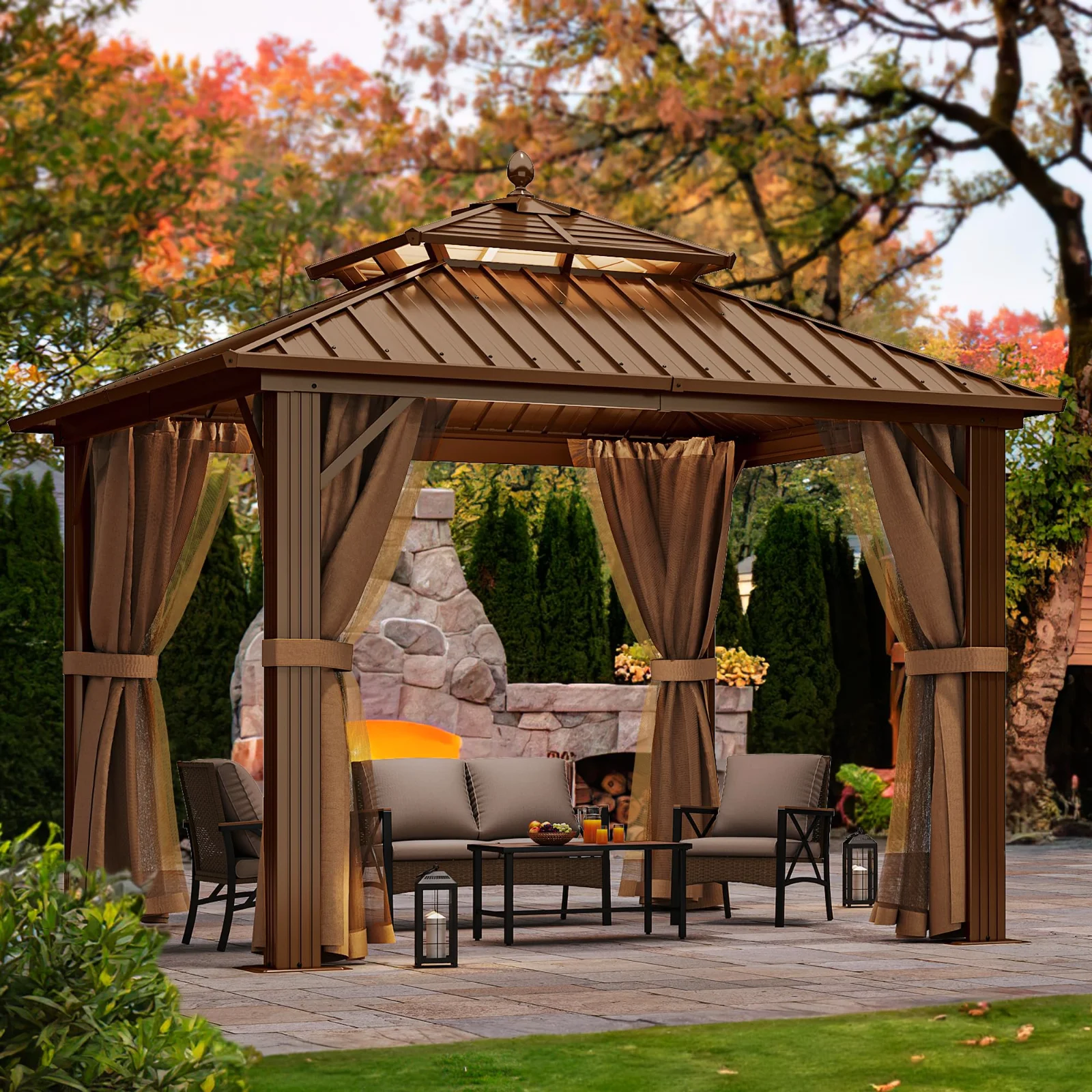
The hardtop gazebo is built to negotiate: its double-tier roof is not a style, it is a vent. Gusts that would lift a sealed roof pass through the gap between tiers, bleeding the pressure difference that does the lifting. That is why our hardtops stand through seasons, and also why they still ship with anchor hardware for every leg. Anchored to a slab or deck framing, a hardtop treats wind as weather. Unanchored, it treats wind as an invitation.
The pop-up canopy has a different contract: it is a fair-weather structure, and its virtue is that it admits it. Stakes and ropes ship in the bag and should be used every single time, weights belong on every leg on hard surfaces, and when real wind arrives, the canopy's best feature is that it takes ten minutes to not be there anymore. Taking a canopy down early is not a defeat. It is the design working. The fabric top comes off for storms and winters in the bag, which is also the reason canopy tops outlive canopy frames so rarely on lots where this rule is ignored.
The party tent is the most engineered of the three precisely because it is the largest sail. Its stake plan, every stake, every rope, at the angles the sheet draws, is a structural specification, not a suggestion. A tent with half its stakes is not half as safe. Site it clear of power lines, check the forecast for the whole rental window, and appoint one person to own the take-it-down call before the event starts, because groups do not make that call well in the moment.
Anchoring, surface by surface
All three formats end at the same question the storage guide ends at: what holds this to the planet? On a concrete slab, expansion anchors through the gazebo's base plates are the gold standard, and weighted plates serve the canopy. On a wood deck, lag bolts must find the framing below the boards, not just the boards, because a deck board alone holds a screw the way wet cardboard holds a promise. On soil and gravel, auger-style earth anchors with straps do for a gazebo what stakes do for a canopy, and they go in during assembly while the frame is light and forgiving.
The pattern rule from the storage guide applies unchanged: anchors on one side accomplish very little. Wind changes direction, and the anchor plan should assume it. And after the first month, and again each spring, walk the legs and check tension, because freeze-thaw cycles and deck wood movement both loosen what October tightened.
What the roof itself is made of
The word hardtop covers several honest constructions, and it is worth knowing which one is overhead. Steel roof panels, galvanized and coated like the shed walls in the same zone, are the workhorse: opaque, quiet in rain once seated, and indifferent to sun. Polycarbonate panels trade a little of that toughness for light and throw a bright, diffused shade that reads more like a pergola's, which some seating areas prefer and some, particularly west-facing ones, find too generous at sunset. Both builds hang from the same logic underneath: a galvanized steel frame, a double-tier roof with a vent gap, and legs that end in anchor plates rather than hopes.
Fabric tops, on canopies and party tents, are a different bargain and age by different rules. The relevant figures on a fabric spec are the denier of the weave, which predicts tear resistance, and the coating, which decides whether the top is merely shade or actually rain cover. A fabric described as water-resistant sheds a drizzle and surrenders to a storm. PVC-coated event tops shed real rain but want their seams seated and their pitch maintained, because water that pools on a flat fabric roof finds every weakness there is. No fabric of any price survives being stored wet, a rule worth repeating until it stops appearing in field reports.
One more material note, because reviews ask: the netting on a gazebo is mosquito equipment, not structure, and the curtains are privacy and low-sun equipment, not walls. Neither is rated to carry wind load, and closing all four curtain sides in a gust turns the gazebo into exactly the sealed box the double roof exists to avoid being. Open a side, let the structure breathe, and let the vents do the job they were drawn for.
Assembly day, planned like a small pour
A hardtop gazebo assembly is an afternoon with two people, a level and the printed steps, and it goes smoothly in direct proportion to what happens before the first bolt. Walk the site the day before. Confirm the surface is flat enough that a level on a plank does not argue corner to corner. A gazebo can be shimmed a little, but a slope you can see is a slope the doors and curtains will report forever. Lay out every labeled bag against the manifest while the box flaps are still up, because discovering a missing bag at step forty costs a mood, and discovering it at step four costs nothing. The hardware ships counted, with spares of the small pieces, for exactly this quarter hour.
Build the roof low if the instructions allow it: most of the swearing recorded in gazebo reviews across every maker happens overhead, and a roof tier assembled at chest height then lifted with a second pair of hands is a different afternoon than the same tier assembled on a ladder. Snug every bolt on the first pass and torque on the second, once the frame is square and the diagonals measure equal. Then anchor the same day. The forecast that was clear at breakfast has no obligation to stay that way, and an assembled, unanchored gazebo is the most expensive kite the yard will ever fly.
Canopies reward a smaller ritual: open the frame halfway, hang the top loosely, then extend fully and tension last, which keeps fingers out of scissoring joints and fabric out of clamps. Party tents reward the opposite of improvisation: the layout sheet stakes first, frame second, cover last, in the order printed, with the crew the sheet says, and the one adult who owns the weather call already appointed.
“This is the best thing I have ever bought. We have it over half of our deck. It was fairly easy to put together. You do need at least two but three are better.” A five-star field report on the hardtop line, word for word.
Living under it: the seasonal rhythm
A hardtop gazebo changes the yard's calendar. Spring is inspection: anchor tension, roof panel fasteners, a hose and soft brush for the frame, and the netting and curtains rehung after their winter indoors. Summer is the season the purchase was for, and the only chore is keeping the roof clear after storms. Fall is when the fabric comes down: netting and curtains washed per their tags, dried completely, and stored inside, because fabric that winters on the frame ages three seasons in one. Winter, the hardtop stands bare-framed and shrugs. Rake heavy snow from the roof with a soft-headed tool from the ground, the same courtesy the shed roof gets.
Canopies and party tents winter differently: dry, folded, indoors, with the frame wiped down and the stakes counted back into the bag. The single largest killer of canopy tops is being packed wet once. Ten minutes of drying in the garage buys years of fabric.
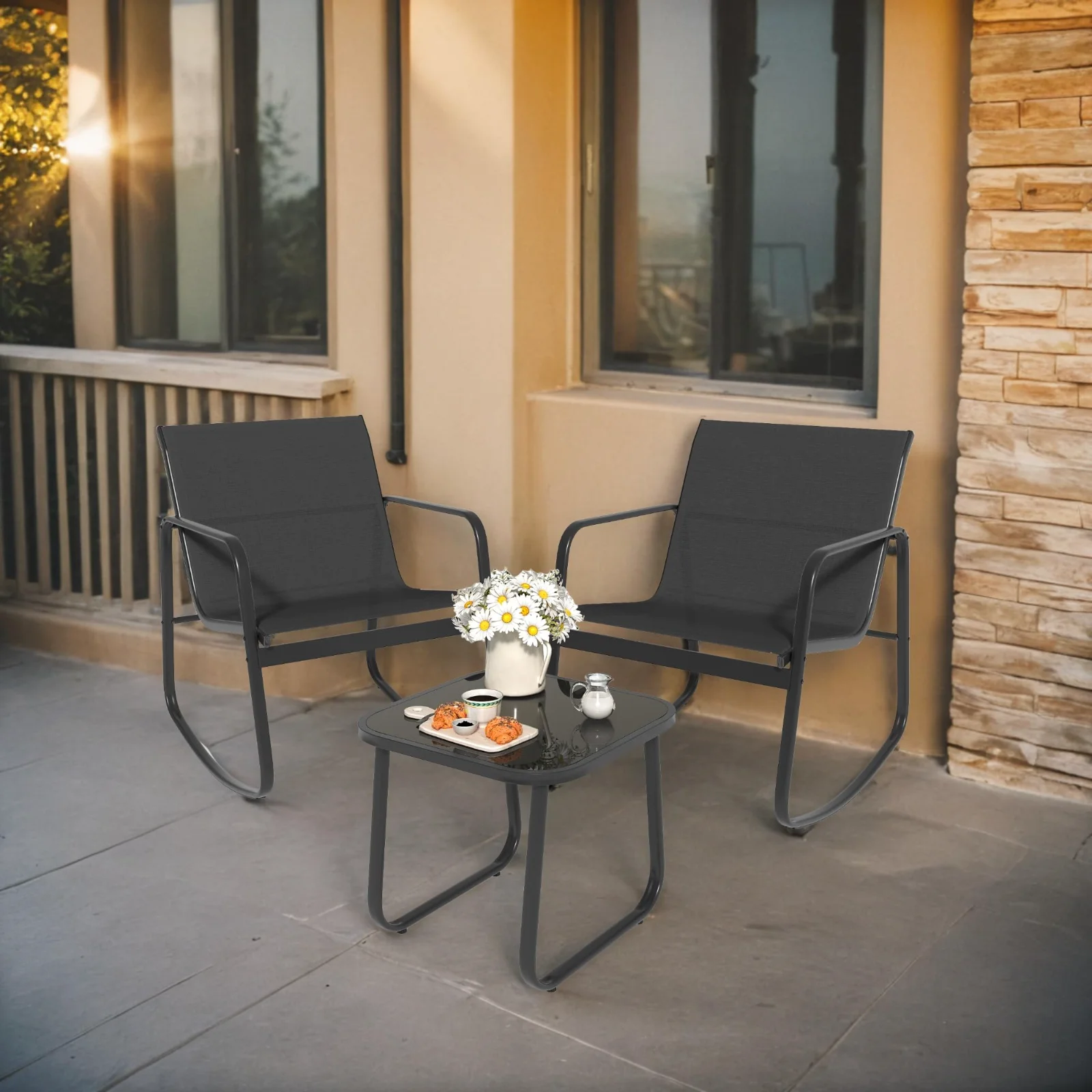
Under any of the roofs, the furniture question follows: seating that lives under a hardtop can be a grade more relaxed about weather than seating in the open, which changes what you shop for. The patio zone on the DWVO lot is built around exactly that split, and the cushions' winter address is a deck box, which the backyard storage plan sizes in gallons.
The grill, the cooler and the roofline
Two placement notes that recur in field reports. First, the grill: shade for the cook is a gift, but a grill does not belong under a canopy top or tight against a gazebo curtain. Keep open air above the grill per the grill's own manual, and put the cook's shade beside the heat, not over it. A grill cart with a stainless top parked at the gazebo's edge is the arrangement that keeps both the burgers and the fabric happy.
Second, the cooler: shade is the cheapest ice extender there is. A rolling chest parked under the gazebo instead of in the sun works measurably less hard, which is the kind of free win the cookout cold chain guide is full of. The shaded corner of the seating area is the cooler's address, and the sunny railing is not.
Shade is a system: the roof makes the room, the curtains aim it, the anchors keep it, and the calendar maintains it.
Choosing, in the end
Strip the decision to its skeleton and it is three questions. Does the seating area have a permanent address? If yes, the hardtop gazebo is the answer and everything else is an accessory. Does shade need to travel or store flat? Then the canopy, sized honestly by people rather than by furniture, with the stakes actually used. Is this for an event bigger than the yard's daily life? Then the party tent, sited by its sheet, staked by its plan, with one adult owning the weather call.
Whichever roof it is, buy the anchor hardware's weight in seriousness, respect wind as the design constraint it is, and put the structure where the afternoon actually happens. Every gazebo, canopy and tent we currently build is on the front page with its footprint in the card, every figure is from our last update, and the heat guidance quoted above is linked below with the date we read it. The sun will be along shortly to test all of it.
